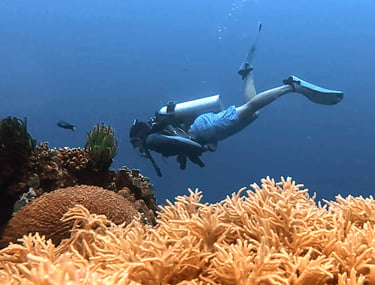
So you are dreaming about your next dive trip, what choices can you make to have a better holiday and be a responsible diver?
Remember that responsible diving can be achieved in different ways in different places, and behaviour can be more or less responsible. It’s about recognising the dive centres and resorts that are doing what they can, trying to make the right choices to benefit the local community, environment and divers.
1. Choosing your dive operator
Look for dive operators/centres that have a clear presentation of responsible tourism values and initiatives, here are some key areas to watch out for.
- Creating local jobs, employing and training local people. This ensures that some of your dive dollar or pound enters the local economy and benefits the community, as well offering the opportunity for local people to work in the dive industry as guides and instructors. For example Fish ‘n Fins dive centre in Palau has had a commitment since 1972 to hire and train local Palauan dive guides, so the majority of their guides and all their boat captains are Palauan
- Working with the local community and celebrating what is unique and diverse about that specific place. Often these projects or events are included in the news or blog section of websites.
- Taking innovative and different approaches to the unique issues of that area, for example the Bali Dive Academy worked with scientists to create a code of conduct for diving with Sunfish (Mola Mola) which are regular visitors to their local reefs but were being disturbed from their cleaning stations by divers.
- Engagement with local community and opportunities for local people to access the tourism income – for example guided activities above water, excursions to local sites, village tours, markets.
- Respects social customs and local culture, ensure that diving activities don’t have a negative impact on local livelihood activities such as fishing, or access to beaches
- Use local suppliers e.g. locally grown food where possible, locally made products e.g. Fantasea Divers, and Reef 2000 Diving in Dahab both use locally grown food and crafts from local Bedouin tribes in their hotels.
Minimising negative environmental impacts:
-real environmental initiatives (not just PR exercises). For example initiatives such as the facilitation of no take zones or marine resource management projects with local communities. Wakatobi Dive Resort have created a marine protected zone, it includes all 17 communities around the resort and stretches over 20km (12.5 miles) of some of the finest reefs of the world, including the protection of dozens of top dive sites. Misool Eco Resort have created a 425 sq km No Take Zone and they have trained and employed local people to patrol and protect the zone.
- collaboration with scientific projects, for example Blue o Two’s Project Shark Liveaboard, Aqua Firma’s WhaleShark conservation trip.
- showing leadership in taking responsibility for example speaking out against an issue or unacceptable behaviour, for example Soneva Fushi Resort in the Maldives sent out emails and letters to nearly 90 tourist re-sorts, 70 dive centres, approx. 300 travel agents in the Maldives and tour operators worldwide, hoping to get their support for the campaign against killing sharks. Dive Aqaba posted an example of violation of marine park rules on their website and encouraged divers to e-mail the marine park authorities to ask them to enforce the rules. 
- Membership of environmental groups or local community groups. Eco divers in Manado is a member of the North Sulawesi watersports association which is the local environmental organization working for the protection of that part of Sulawesi. See their website for info on their fantastic projects.
- Promoting environmental education and awareness in local schools, for example Blue View Divers in Thailand donate to a fund which is dedicated to teaching Thai children to dive and educate them in conservation and the marine environment.
- Running projects, lectures or special events to educate guests, offering speciality courses. Bucaneer Diving in Kenya has introduced a Seahorse and a Turtle PADI speciality course.
The blog posts will showcase dive centres and operators that are leading the way in responsible diving. Very often the responsible dive factors such as the local staff and knowledge, the unique atmosphere, fun conservation projects and the enhanced quality of the reefs and marine life are what makes diving with them a richer and more memorable experience. Better experiences = happy divers!